Thursday, January 6, 2011

A perfect waste of time and dirt

Admittedly, picking up and counting every pre-paid phone card on a 1-km walk to work could be considered a complete waste of time by many folks. I prefer to call it an exercise in anthropological observation.

Either way, I have found something that even my dear mother would consider a monumentally pointless activity. (And she is someone who patiently watched me engaging in numerous monumentally pointless and dangerous activities as a child.)

What I'm doing is moving red dirt from a next-door construction site to a series of small but useless "planters" in front of my own apartment building.

Here's what one of the planters looks like in its current state:

(I call this a "planter" because at one time the building owners constructed about 20 of these square concrete structures and planted mini-palm trees. Naturally they didn't consider how the plants would be watered so all but 3 or 4 of them have died.)

There are three pretty good reasons my enterprise is pointless:

1) Saudi Arabia is vast, inherently dusty, sandy and windblown desert environment...and that's just the cities! (insert comedic rim shot) And there's 2.3 million sq. kilometers of sand and ground up rock on the Arabian peninsula trying to get in.

2) There appears to be very little if any regulation for construction sites so that it's common to see large piles of uncovered dirt, rubble, worker refuse and construction materials that blow up and down the street.

3) Pedestrians in this multi-ethnic neighborhood regard the street and sidewalk simply as places to deposit whatever cigarette butts, tissues, glass bottles, juice boxes, gum wrappers--and phone cards of course--that they happen to find in their hand at the moment and have no more use for.

So this Thursday morning while I was doing my laundry, which is just a few steps from the streetfront, I got the idea to go outside and fool around with the planters for a half hour with pretty red dirt from the construction site next door.


All three planters now have about 2 inches of red dirt and whatever objets d'art I could find lying around as a centerpiece. Thus we have a nice flat rock, a cylindrical block of something or other that reminded me of a ka'ba sticking out of the dirt, and a 6-inch piece of plastic tubing (pic #3) embedded in the dirt with rocks and a stick.

How long will these three planters remain butt- and soda-can free?

I'm guessing a day or two.

I'm also guessing the next door neighbors won't notice that some of their dirt is missing.

________________________________________
Update, Feb. 1: the planters are no longer daily repositories of cigarette butts, tissues and empty water bottles, but people do occasionally drop items in there. Just when I think progress is being made, some noodnink drops a soda can in one of them.345

Thursday, December 16, 2010

It's all in the cards

I've been conducting a little experimental observation the past week.

It started with simple curiousity about all the pre-paid phone cards one sees lying around on the ground but it's really about the larger issue of littering in KSA. I got the idea from reading Susie of Arabia's article about the clean up effort on the corniche in Jeddah. As I opined at the time to Susie, I heartily endorsed the idea but felt confident that anything they cleaned up would be back in duplicate the next week.

So here's what I did
:

For the admittedly arbitrary period of 4 days, I stopped and picked up every single pre-paid plastic phone card on the ground in my path between my apartment and my workplace, a distance of about one km. I stopped after 4 days because I had gone over the slightly varying routes 8 times (round trip) and found that the average number of cards was decreasing only slightly. I figured the first couple days I was picking up cards from several previous weeks but by the third day it was mostly new cards.

My hypotheses going in were (1) that the assortment of cards would reflect the market shares of the three local providers: STC, Mobily and Zain, in that order, (2) that the value of the cards would be evenly distributed among 10s, 20s, 30s and so on. [Note: 10 SR=$2.67 US]

I was also simply curious about how many cards there really were. I asked a few colleagues who hazarded guesses of 7-10 cards per day.

The actual average was 41.75, with slightly higher numbers on the first and second days.

Here's what my collection looked like after 3 days:

The sharp-eyed among you will note that my initial two hypotheses were gloriously disconfirmed.

While STC dominates the market for phone cards in the Malaz district, Zain clearly trumps Mobily, which is actually the market's second-in-command for overall telecoms market share.

Why is that? Well, as a colleague mentioned, it seems that Mobily has better deals for post-paid service, leaving STC and Zain as the price-leaders for pre-paid service. I can't vouch for that but it's certainly suggested by the numbers:

STC: 68%
Zain: 20%
Mobily: 12%

I was also wrong about the distribution of phone card values which were completely dominated by the 10 and 20SR cards:

SR 10: 77%
SR 20: 17%
SR30: 2%
SR 50: 3%
SR 60: 0.5%
SR 100: 0.5%


Essentially 10 and 20 SR cards comprised 87% of the pre-paid cards left on the ground.

It's important to remember that these figures represent cards carelessly or deliberately left on the ground, not the total number of cards purchased, some of which are undoubtedly dropped in the trash. So it may well be that the numbers tell us more about how the mixture of the army of foreign blue-collar or subsistence workers and middle-class native Saudis dispose of trash than the population as a whole.

In other words, this doesn't say anything about what percentage of cards are put in trash versus dropped, or what the true distribution of card values is.

Be that as it may, it's clear that residents and passers-by in Malaz buy the cheapest cards available and, from what I can personally observe, think no more about dropping a card once it's been scratched than they think about a fly once it's shooed from their arm. Once a card has been scratched and used, it is no longer in the customer's attention span and seems to simply fall from his hand like so much lint.

In fact, I asked one gent, with as much politeness as I could muster, why he dropped his card instead of throwing it in the trash. He replied quite matter of factly, "That's how we do it here."

I asked another guy whom I found buying a 10SR card at the bakalla (mini mart) why he bought that value instead of something higher. He said, "It's how I control my phone calls. If I got more, I'd just use more."

It's a bit tricky to calculate how many minutes one gets from a given phone card given that different providers have different rates and SMS charges are different from voice calls, not to mention the variety of services like prayer time notifications, but I'd venture to say that a 10SR card (worth, as noted, about $2.70 US) yields about 18-20 minutes of telephoning or 40 text messages.

Of course many of the dropped cards can be found in the immediate vicinity of the bakallas but a surprising number are found up and down the neighborhood streets. The reason for this, as I observed, is that a customer buys a card and then walks down the street scratching to get the code and re-charging his phone and then drops it when he's done, which may be a block and a half away.

As I was discussing this with a colleague, he ventured a further opinion about phone usage in the kingdom. According to his theory, Indians are the big texters, Pakistanis won't text but will call, and Bangladeshis use a sort of missed-call system to convey information like "on my way home," thus avoiding call charges. I can't vouch for any of this; just tellin' what I hear. Americans simply lose their phones a lot. And of course Saudi students usually have two phones -- one that the family knows about and one for...other uses.

Ecologically, however, I'd say the cards are a disaster, considering the amount of plastic involved for a useful life of 20 seconds, not including the resources needed to create the cards and truck them to the points of sale. And don't forget the plastic sheaths each card is wrapped in. Once the number has been scratched, the card becomes useful as...nothing.

One thing that some vendors do is provide a register receipt with the re-charge number instead of a plastic card. I'm sure the customers drop the register paper just as freely as the plastic, but the paper is a bit more biodegradeable.

_______________________________________________

Here's a typical Zain card


At least the folks at Mobily give you a collectors' motive for not tossing out the cards.


And finally: a glimpse of the rare 100 SR (about $27 US) STC card!


1234

Sunday, October 10, 2010

The ears have it


Abdulaziz?
Here teacher.
Abdulkareem?
Present!
Abdullah?
Here sir.
Abdulraheem?
Good afternoon Mister V.

As I continued to read the afternoon roll of Saudi students, through the various Abduls, Alis and Mohammeds, the noise level in the classroom of 30 variously interested English language learners continued to rise.

Having read the roster list thrice already that day for my other classes, I could feel my voice starting to get scratchy and a little hoarse as I raised my volume to reach over the din. And we hadn't even gotten into the annoying business of gerunds and past continuous tense.

Then it occurred to me. They're teaching me. And what they were teaching is that their attendance meant more to me than to them.

Which is patently untrue.

Whether a particular Khalid or Majed was in class that particular period really made no substantive difference to me. It was just a check mark (present) or a zero (absent) and a possible argument later in the week when they'd come to my office to ask for help (student code for "Please don't mark me absent"). They wouldn't win the argument.

The fact is, an absence means a lot more to Hussam than to me. Once he goes over the rather generous allowance of absences he is afforded in order to keep earning his stipend, it's all over for him.

So why was I shouting to be heard over the pre-gerund clamor?

I tried a little experiment. I started lowering my voice...

Ayman?
Here, Mister V.
Emad?
Present.
Ibrahim?
Right here teacher.

I lowered it further...

Mishal?
Present!
Nawaaf?
Here.

By the end of the alphabet I was practically whispering. No kidding. My voice was low enough that I could barely hear myself!

Without a noise meter I couldn't say whether the ambient noise had gone down. If so, I don't think it was by much. But some of these 21- and 22-year-olds were sitting in the very back row of the room and they could hear me just as well as if the room had one of those acoustic domes where you can hear someone whisper from 30 meters.

It was eerie. A face--Muadh, Nasser, Omar--would pop up from behind a screen of students saying "Here Mister V!"

From this I draw two conclusions:

1) Never underestimate the ability of young-eared Saudis to hear at a distance.
2) People hear what they need to hear.

It's nice to get a lesson from the students.

If only we have ears to hear it.
-----

Friday, September 10, 2010

Wednesday, August 4, 2010

Top 20 Middle East travel tips

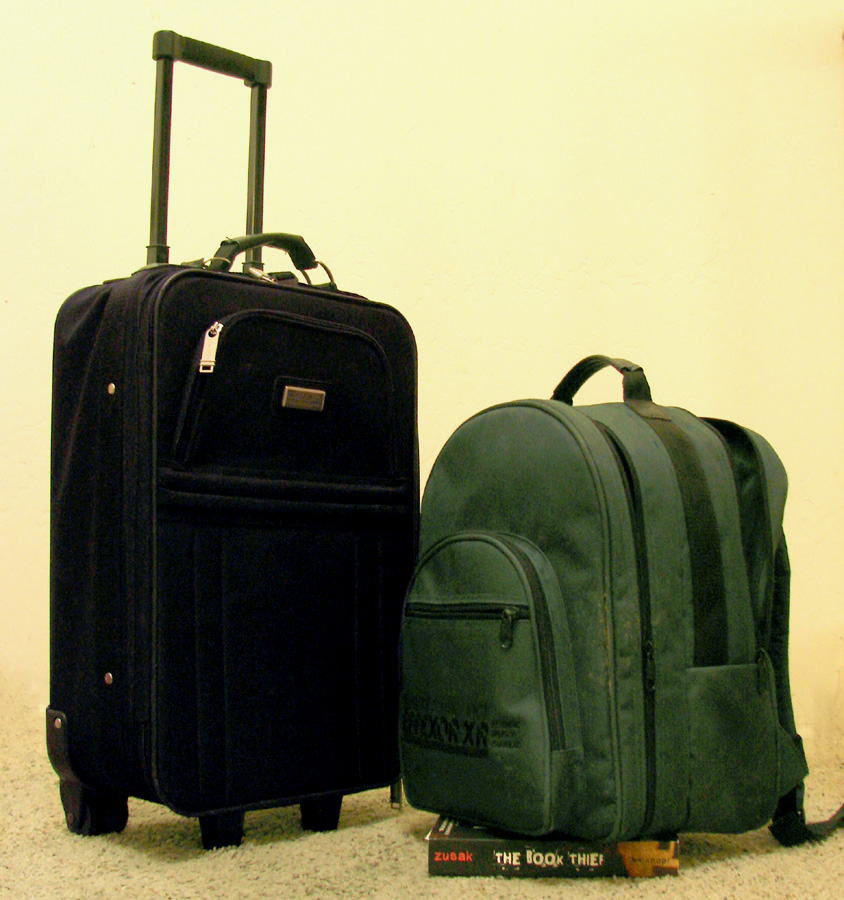
Having trekked from Riyadh to Amman, Jordan to Sharm el-Sheikh, Egypt to Beirut to Istanbul and thence to London, Chicago and Phoenix in the past few months, there are few things I've learned that you may find helpful.

Of course these are nothing compared to significant world travelers like my sister or niece so I've cadged a few items from them.

1. Most people planning a vacation like to book a direct flight to their destination. But I found that by accepting a hefty layover in a desirable city, you can actually double your adventure. In fact, if you plan it right and are careful not to miss your flights, it's almost like the airline is saying "How'd you like a free trip to Beirut as long as you're heading toward Istanbul?" The trick is to give yourself at least 6 or 7 hours, quiz some locals about the distance and typical cab fares into the city, get a transit visa (if necessary) and then simply let your spirit take you where it will. Caution: a lot of airports won't have storage lockers so you may have to haul your carry ons with you.

2. Beirut is a wonderful trilingual, cosmopolitan city full of history and abounding in outdoor cafes, some with watermelon hubbly-bubblies.

Imagine a place where you can find a Roman ruin, a Christian church and a mosque literally side by side. (photo below)

3. The most expensive instant coffee in the universe is in the Beirut airport near Gates 1-8. Avoid that cafe. Get your coffee before you head to the gates.

4. Obviously traveling light is the desideratum, but remember that carry ons don't have a weight limit, just a size limit (the size of the overhead bin). So if you're also checking bags, feel free to load up your heaviest items in your carry ons. If you can manage to heft it onboard you may be able to avoid overweight charges on your checked bag. On the other hand, if you're doing the layover adventure thing, it's best not to load up your carry ons because they'll get mighty heavy the longer you're out and about.

5. Airport Internet access is about as reliable as, well, airline departures, so don't count on it. Interestingly, you can sometimes find hidden WiFi hotspots by wandering around, if you're really desperate for an e-mail fix.

6. Pack the charging devices for your key electronics along with one or two multipurpose outlet adaptors in your carry on, not in your checked bag.

7. If you're ever in Amman, I highly recommend the museum on the big hill at the Temple of Hercules.

The museum covers the entire gamut of civilizations that have occupied the region from the stone age to the present and has some very nice original specimens of the actual Dead Sea Scrolls.

8. Always check on the typical cab fare to your destination. In some cases, fares are regulated but in most Middle East locales, the rate is highly negotiable and the locals will definitely take advantage of you, possibly charging twice as much as the going rate. For example, in Riyadh, the fare from King Khalid Airport to the Radisson or Al Yamama Hotel should be about 70 riyals, but the freelance drivers will insist that it should be 125 or even 150 riyals.

How to check? Make some instant friends in the duty-free store, tourist info booth or coffee shop and sort of average out their estimates.

9. Make your best estimate about how much money you'll need to exchange at the airport into local currency and then make sure you have plenty of small bills. You're going to need this when you negotiate with your cabbie. One method that works pretty well: Having determined what seems to be a fair average price for a ride to your destination, say, 20,000 Lebanese pounds, get that exact denomination and put it separately into one of your pockets...with nothing else in the pocket. When the freelance cabbies start approaching you, reach into your pocket and dramatically flourish your 20,000 pound note and say "downtown, 20,000." As with any haggling situation, you have to be prepared to walk away briskly. Holding out the note and suggesting that this is the only currency you have helps to sell the proposition. Make sure you have another note of the same denomination for your ride back where the flourish is even more effective. A lot of arguments can be avoided by having the exact change. If you've negotiated a $20 ride and all you have is a $50 you've put yourself in a weak bargaining position.

10. Count the metallic junk in your pockets and then remember that magic number for when you're going through metal detectors at airports. Example: belt, pen with metal clip, money clip, USB device , cell phone = 5. When you go to collect your junk, don't leave until you've counted 5 items.

11. When you pack your carry ons, try to pack consistently so that you're always keeping the same stuff in the same pockets or compartments.

12. For longer trips with few plane changes, unless you're an actual fashion model, wear your heaviest clothing, including your heaviest shoes onto the airplane to avoid having to pack them in your checked luggage and possibly face a hefty overweight charge. There's no charge for simply being heavy as long as you don't take up an extra seat. Budget-conscious students manage to wear multiple outfits including numerous heavy sweaters and would probably wear multiple shoes if they could figure out how to do that.

13. As obvious as this sounds, check your plane tickets, passport and visa a week before you're ready to leave. Put them somewhere so insultingly obvious that you won't forget them on departure day. Tape a note to your front door that says: tickets...passport...visa. A friend of mine attending a trade show in Las Vegas booked her hotel a month in advance, had her customer meetings all lined up and hotel reservation confirmed and then realized the night before that she forgot to book the actual flight. Another friend tells of planning a wonderful dream vacation to Italy with her pilot boyfriend only to find -- at the check in counter -- that he didn't have a passport.

14. Traveling with a favorite companion can be a wonderful experience but the best adventures happen when you go solo. Also the most boring. Also the most exciting.

15. Sometimes planning well ahead isn't always the best strategy . . . as long as you don't wait till the day before. During the Iceland volcano catastrophe this spring, travelers who had booked their trips months or weeks ahead found themselves either completely unable to leave for European destinations or stranded en route. In the meantime, a few people who had arranged trips just a few days prior had the benefit of the most recent information and easily traveled to non-volcano destinations. However, once you have determined your destination and dates, don't delay actually booking your flight and hotel since rates during holiday periods can double in just a few hours.

16. If you ever find yourself here . . . . . . Alexandria International Airport (ALY) -- run away, run away. The ambiance resembles what I imagine Cold War-era Berlin must have been like on the dumpy side of town. There is not an electrical outlet of any kind to be found (though I sweet-talked the coffee concessionaire into letting me plug my cell phone under the counter) and obviously no Internet. The restrooms have no paper products of any kind...and no hand dryer either.

17. Most Middle East cities have a form of cheap shuttle bus service -- sort of a hop on/hop off deal where you simply flag down the mini-bus and yell "stop" when you want to get off. This is a great form of transportation but you need to be very careful about not getting ripped off for the fare, depending on where you are. Sometimes the fare schedule is posted on the bus (e.g., Istanbul). Other places (Egypt) you just have to know the going rate, which varies according to who you ask. Still others have a fixed rate, but it's not posted...again, you just have to ask someone. In Riyadh, the shuttle is dirt cheap (2 riyals, about 50 cents US), but it's a dirt cheap, ramshackle ride where every turn is an adventure in weight and balance.

In Egypt, you really need to ask some trustworthy locals because the driver and his cronies will simply cite whatever fare they think you'll pay.

Typically, you get on the shuttle and sometime during the course of your ride you simply pass your fare up to the driver. If change is called for, he passes it back through the intervening passengers. This is always done on the fly since the essence of the shared-fare taxis or mini-buses is speed and efficiency.

18. As clever as it seems to wear flip flops or easy slip on/off shoes to the airport, it's usually better to wear your most comfortable shoes and socks (again, assuming you're not a supermodel) because it's more important to be able to walk long distances than to worry about the extra 10-15 seconds tying your shoelaces. By the way, I carry a very small plastic shoehorn in the outer pouch of my carry on.

19. Since all luggage seems to be either black, gray, gray/green or black/gray, some folks like to tie colorful ribbons to the handles for quicker identification at the luggage carousel. But those ribbons or yarn can get caught in the revolving contraptions so it's better to use colorful tape.

20. Never pass up a chance to use a restroom.


[all photos copyright by the author; all rights reserved; inquire within]

Hitting 60

I'm pleased to say that the Veeds of Arabia blog has just notched its 60th country: Jordan.

In the larger scheme of things, it really doesn't matter how many different countries the blog is being accessed from. In fact, I suspect that a lot of visitors simply landed here by accident looking for something else.

I do try to keep my keywords and tags fairly accurate and specific so as not to mislead readers who may be keen to learn THE SECRET OF THE UNIVERSE, for example, or HOW TO CURE DIABETES, or WHO WILL WIN THE BASEBALL WORLD SERIES, or even the BIG SECRET THE KARDASHIAN SISTERS DON'T WANT YOU TO KNOW.

Obviously you won't find any of that here. (Well maybe the stuff about the Kardashians...as soon as I figure out what they're famous for.)

However, I am a little surprised at how long it took to hit the magic siteen. Countries were piling up like cars during a Phoenix rush hour for a while and then...no new national flags for about a month.

In case anyone's wondering, the blog is now at its summer headquarters in the aforementioned Arizona sun where the owner is busy sipping adult beverages, playing tennis and watching cable TV.

But that doesn't mean we don't have our thinking shemagh on.

And right now I think I'll have another beverage.


Next time: some things I learned while traveling.
...